
You didn‘t go through years of medical or pharmacy school to be broke. Yet, here you are: juggling shift work, on-call duties, and perhaps a growing sense that your financial life is on autopilot—or worse, stuck in survival mode.
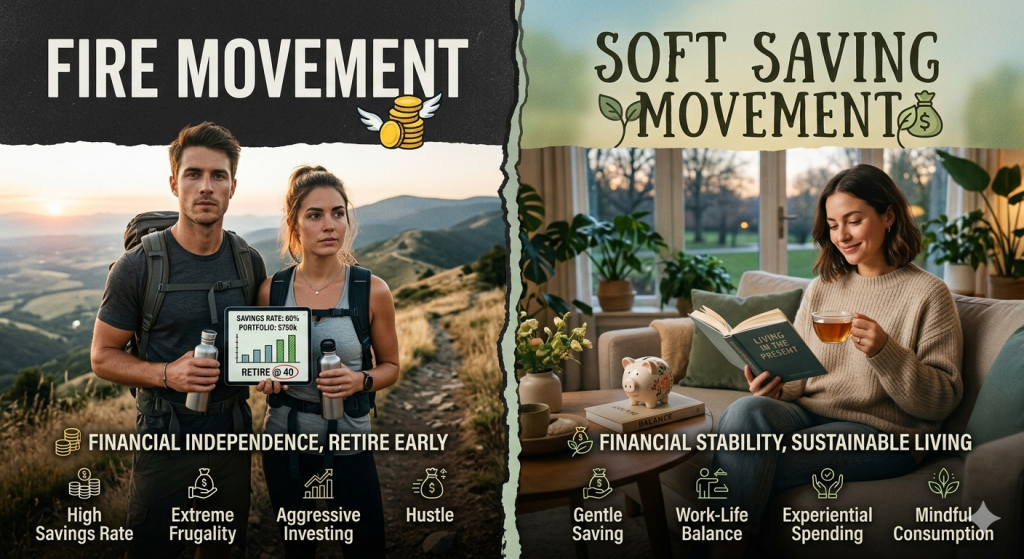
In my work with Malaysian healthcare professionals, I meet two distinct mindsets. There’s the houseman desperate to escape the system by age 40 via the FIRE (Financial Independence, Retire Early) movement. Then there’s the seasoned pharmacist who is burnt out but unsure how to slow down without wrecking their future—a candidate for what the West calls “Soft Saving.”
But which philosophy actually works for someone with a salary scale, a PTPTN loan, and a dream of opening their own clinic? Let’s break it down.
The Malaysian Healthcare Landscape: Why This Matters Now
Before we dive into the philosophies, we have to address the elephant in the consultation room: financial stress is endemic in our professions.
Recent data on Malaysia’s healthcare workers paints a grim picture. While doctors and pharmacists eventually earn a livable wage, the path there is fraught with low starting salaries and high expectations . We are seeing a “great resignation” ripple effect; between 2020 and 2024, nearly 7,000 healthcare workers left the public sector, with nurses reporting stress levels as high as 77% .
Even for those who stay, the financial burden is heavy. Many medical and dental graduates start their careers with student loans between RM100,000 to RM250,000 . During housemanship, your starting pay hovers around RM4,000 to RM5,000. You are “Dr.” in title, but your bank account doesn’t reflect that prestige yet .
This is the crucible in which your financial philosophy is forged. Do you double down, save aggressively, and try to escape the 9-to-5 (or more accurately, the 8-to-8 shift) by 45? Or do you prioritize your current mental health and spend on things that make you happy now, even if it means working a few extra years?
Let’s look at the two options.
What is FIRE? The “Dr. Speed” Approach
The FIRE movement is about achieving financial independence as quickly as possible. It involves saving aggressively—often 50% to 70% of your income—and investing those savings to generate passive income that covers your living expenses .
How FIRE Looks for a Malaysian Doctor/Pharmacist
A typical FIRE follower in Malaysia lives by the 4% Rule and the 25x Rule. Simply put, you need 25 times your annual expenses invested. If you can live on RM36,000 a year, you need a nest egg of RM900,000 to RM1,080,000 .
For a specialist earning RM15,000 a month, this might mean:
- Driving a 10-year-old Myvi while colleagues lease new German cars.
- Maxing out EPF voluntary contributions (taking advantage of the 5-6% historical dividend rates).
- Taking on locum shifts aggressively to boost income.
- Investing in a diversified portfolio of REITs, unit trusts, and maybe a small apartment for rental income.
The Pitfall: The Lean FIRE variant, where you cut expenses to the bone, can lead to burnout. If you are already exhausted from managing a high patient load, coming home to a “frugal” lifestyle with no joy can feel like a prison sentence .
What is Soft Saving? The “Balanced Dr. Life” Approach
“Soft Saving” is a reaction against the intensity of FIRE. It’s the realization that if you wait until retirement to enjoy life, you might be too tired (or too ill) to do so. It prioritizes mental well-being and present happiness over a hyper-aggressive savings rate .
How Soft Saving Looks for a Malaysian Healthcare Professional
A soft saver acknowledges the high stress of the job. They know that 77% of their colleagues are experiencing significant stress, and they refuse to let money worries compound that .
For a pharmacist earning RM8,000 a month, this might mean:
- Paying for convenience: Hiring a cleaner or ordering GrabFood to preserve energy for family.
- Spending on “Burnout Prevention”: Taking that trip to Langkawi even if it means dipping into potential savings for the month.
- Barista FIRE: This is a popular middle ground within the FIRE community. You might leave the high-stress hospital environment for a less intense role (like a retail pharmacy) that pays enough to cover daily expenses while your investments grow .
The Pitfall: “Soft Saving” can easily become “Not Saving.” If you aren’t careful, you might hit 55 with minimal EPF savings, relying solely on the government’s shrinking safety net .
Head-to-Head Comparison: Which Path for You?
| Feature | FIRE (Intense Saving) | Soft Saving (Balanced Living) |
|---|---|---|
| Savings Rate | 50% – 70% of income . | 10% – 20% of income. |
| Lifestyle | Frugal, mindful spending. “Live like a houseman” longer . | “Treat yourself” mentality. Spend on experiences and convenience. |
| Investment Focus | Aggressive investing (stocks, REITs, business ownership) to hit RM1M+. | Steady EPF contributions, moderate ASB/unit trust investments. |
| Retirement Age | 40 – 50 years old. | 55 – 60 years old (traditional). |
| Mental Health | Risk of “FIRE burnout” from deprivation. | Prioritizes current mental well-being. |
| Best For… | The single specialist with high income and low family commitments. | The parent struggling with work-life balance and shift work fatigue. |
The Middle Path: A Malaysian Solution
In my practice, I rarely see “pure” FIRE or “pure” Soft Saving work for doctors and pharmacists. The most successful clients take a hybrid approach.
Here is my 3-step framework for healthcare professionals:
1. Build the Shield First (The Non-Negotiable)
Before you decide to be FIRE or Soft, you must protect your ability to earn. Given the high burnout rates in the profession , you need:
- Emergency Fund: 6 months of expenses (because if you break down, who treats the patients?).
- Income Protection / Critical Illness Insurance: Your greatest asset is your medical license. Protect it.
2. Segment Your Money
You don’t have to choose one philosophy for your whole life. Segment your finances:
- The “FIRE” Account: For your future self. Auto-debit into investments, EPF top-ups, and Private Retirement Schemes (PRS) .
- The “Soft” Account: A guilt-free spending account. This money is for massages, nice dinners, or that new golf club. Spend it without guilt to prevent burnout.
3. Plan for the “Klinik Impian” (The Dream)
Many doctors and pharmacists dream of opening their own practice. This requires mid-term planning that fits neither FIRE nor Soft Saving perfectly. Starting a practice can cost upwards of RM300,000 . This requires a dedicated savings plan that sits outside your retirement planning.
Conclusion: Your Prescription for Financial Health
The FIRE movement gives you a target. Soft saving gives you permission to breathe. As a healthcare professional in Malaysia, you need a dosage of both.
You work in a system that demands 45-hour weeks and often pushes you to the brink . Don’t let your financial plan push you over the edge. Whether you want to retire at 50 or simply want the freedom to work part-time at a clinic you own, the key is having a plan—one that accounts for your unique income trajectory, your debt burden, and your humanity.
Ready to create a financial plan that fits your life, not just a trend?
As a financial planner specialising in healthcare professionals, I understand the nuances of the public service scheme, the volatility of private practice, and the dream of owning a clinic. Click the button below to leave your details and I will reach out to you.
Let’s map out your financial future so you can focus on what matters most: your patients and your peace of mind.
Or, join my email list by clicking here if you are not ready to connect yet.
Disclaimer: This post is for informational purpose only. You should use judgment and conduct due diligence before taking any action or implementing any plan suggested or recommended in this article.
